


What Are Forex Signals?
Forex Trade signals are trade recommendations generated by expert analysts or automated algorithms. They provide actionable insights, including entry and exit points, stop-loss levels, and take-profit targets. The primary purpose of FX signals is to help traders make profitable decisions in real time, even in the most volatile market conditions.
Forex Trade signals are trade recommendations generated by expert analysts or automated algorithms. They provide actionable insights, including entry and exit points, stop-loss levels, and take-profit targets. The primary purpose of FX signals is to help traders make profitable decisions in real-time, even in the most volatile market conditions.
Signals empower traders to:
- Identify profitable trading opportunities: Signals help traders spot trades with high potential based on market analysis and expert insights.
- Save time on market analysis: Instead of spending hours analyzing charts and news, traders can act quickly on the signals provided, allowing them to focus more on execution.
- Enhance trading efficiency: It helps traders make quicker decisions and execute trades without getting bogged down by complex market data.
- Top-rated Forex Signal Providers provide FX Signals through various methods, including Telegram Channels, groups, or communities.
How Forex Signals Work?
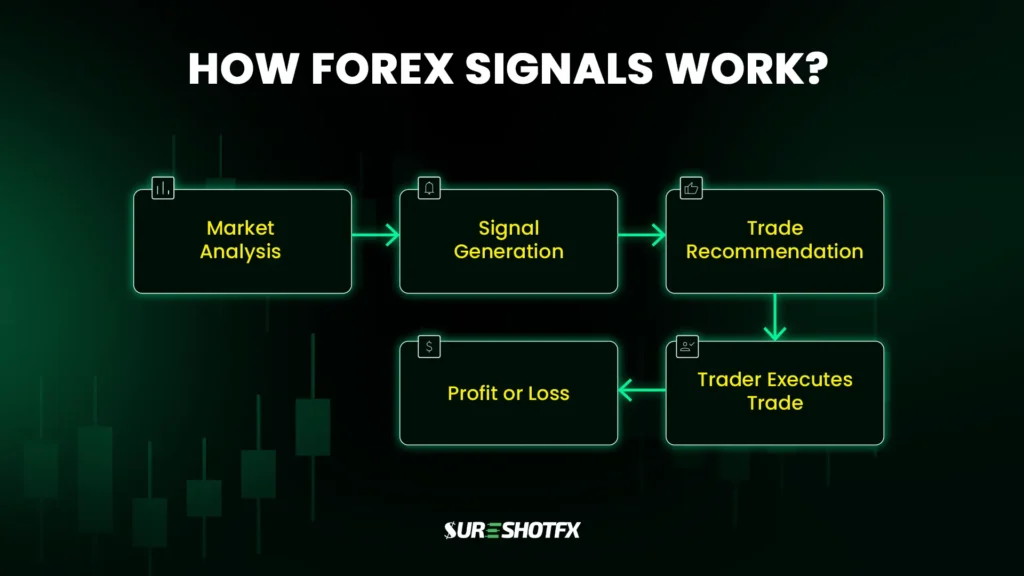
Forex signals work as trade recommendations that help traders identify potential market opportunities. Here’s a step-by-step breakdown of how they function:
- Market Analysis: Trading Forex Signals begins with analyzing the market through technical, fundamental, and sentiment analysis. Traders also consider economic data, news events, and geopolitical factors that may influence currency prices. Additionally, market sentiment is assessed to gauge the overall mood of traders.
- Signal Generation: Based on the analysis, a signal is generated. This can be done manually by professional traders or automatically by algorithms and copy trading tools. The signal includes the currency pair, the action (buy or sell), the entry price, the stop-loss level, and the take-profit target.
- Trade Recommendation: The generated signal is then shared with traders through various platforms such as Telegram groups, trading signal apps, email alerts, and social media channels.
- Trader Executes Trade: The trader reviews the signal and decides whether to execute the trade. If the trader agrees with the recommendation, they place the trade manually or use automated tools to execute it instantly. However, some Forex traders use trade copiers to instantly replicate the trades into their platforms, often depending on the execution speed and reliability of their Forex broker.
- Profit or Loss: Once executed, the trade will either reach the take-profit level, securing profits or hit the stop-loss level, limiting potential losses. If the price moves in the predicted direction, the trader reaches the take-profit level and earns a profit. If the price moves against the prediction, the trade hits the stop-loss level, resulting in a loss.
Types of Forex Signals
Forex Trade signals can be classified by how they’re generated, the analysis methods used trading styles, Forex trading strategies, and cost structures. So traders get a variety of options for their trading. Here are some common types of signals most providers offer-
1. Based on Generation Method:
- Manual Forex Signals: Manual Forex alerts are provided by skilled traders who study price movements using technical and fundamental analysis. These signals rely on human judgment and continuous market observation to find the best trading opportunities.
They offer valuable insights and adaptability but may sometimes be affected by human error and slower execution compared to automated options. So you must understand the difference between Forex signals vs. manual trading before you start trading.
- Automated Forex Signals: Generated through powerful algorithms and trading software, automated signals analyze market data and execute trades in real-time. They provide fast, consistent, and emotion-free trading, making them ideal for those who prioritize efficiency.
These signals operate 24/7 without fatigue and can process multiple market conditions at once. However, their performance relies on the quality of the algorithm and may struggle in unpredictable market situations.
2. Based on Analysis Method:
- Technical Signals: These signals are rooted in historical price movements and technical indicators like moving averages, RSI, and MACD. They help traders spot entry and exit opportunities and recognize patterns and trends with precision.
- Fundamental Signals: Driven by economic news, financial reports, and global events, fundamental signals take into account factors like interest rates and employment data to anticipate market direction.
- Sentiment Signals: These signals gauge market mood by analyzing trader behavior, market positioning, and even social media chatter. They offer insights into prevailing market sentiment and potential reversals.
3. Based on Trading Style:
- Scalping Forex signals:Best Forex Signals for Scalping are designed for traders looking to make quick profits from small price movements within minutes or hours. Scalping is ideal for those who thrive in high-frequency trading and prefer stacking small gains consistently.
- Day Trading Signals:Forex Signals for Day trading cater to those who open and close positions within the same day, avoiding overnight exposure.
- Swing Trading Forex Signals: Swing traders hold positions with Swing Trading with Forex Signals for several days or weeks, capitalizing on market fluctuations and broader trends.
- Position Trading Signals: These signals suit long-term investors who focus on major economic trends, holding trades for weeks or even months.
4. Free vs. Paid Forex Signals
- Free Signals: Signal providers offer free signals to attract new traders. While free signals benefit beginners exploring the market, they tend to be less detailed than premium services.
- Paid Signals: Paid signals, available via subscription, provide higher accuracy and in-depth analysis. They are ideal for traders seeking professional guidance and more consistent results. Paid signals come with expert insights, risk management strategies, and dedicated support.
Mastering forex signals is all about combining accurate analysis, disciplined execution, and ongoing learning. Whether you’re new to trading or looking to refine your strategy, this guide equips you with the tools to parse signal types, evaluate reliability, and integrate them into your workflow effectively.
Ready to level up your trading game? Join Traddion and stay ahead.